Showing posts with label novel. Show all posts

Thursday, June 26, 2014

David McCullough: Truman

  • ISBN-13: 9780671869205
  • Publisher: Simon & Schuster
  • Publication date: 6/14/1993
  • Pages: 1120
The life of Harry S. Truman is one of the greatest of American stories, filled with vivid characters - Roosevelt, Churchill, Stalin, Eleanor Roosevelt, Bess Wallace Truman, George Marshall, Joe McCarthy, and Dean Acheson - and dramatic events. In this riveting biography, acclaimed historian David McCullough not only captures the man - a more complex, informed, and determined man than ever before imagined - but also the turbulent times in which he rose, boldly, to meet unprecedented challenges, the last president to serve as a living link between the nineteenth and the twentieth centuries. Truman's story spans the raw world of the Missouri frontier, World War I, the powerful Pendergast machine of Kansas City, the legendary Whistle-Stop Campaign of 1948, and the decisions to drop the atomic bomb, confront Stalin at Potsdam, send troops to Korea, and fire General MacArthur. Drawing on newly discovered archival material and extensive interviews with Truman's own family, friends, and Washington colleagues, McCullough tells the deeply moving story of the seemingly ordinary "man from Missouri" who was one of the most courageous presidents in history.

 So my specialty is East Asia and I've studied in both South Korea and Japan. And it's ridiculous that I knew nothing about Truman before reading this book.
 Once again, McCullough has written a book that I just want to go out and yell "READ THIS PLEASE FOR YOUR OWN SAKE." There is so much info packed into this massive tome and it's worth every page. Truman is one of those under-appreciated presidents who gains from history. When he left office, his approval rating was pretty low. Then again, the Korean War was drawing out longer than anyone had anticipated (thanks to MacArthur and several other factors, but I really dislike MacArthur and I wrote two papers about it last year) and America just wanted her boys home. Looking back, history has decided that Truman was one of the best presidents this nation has had. I'm inclined to agree. He's definitely in my top five. He came from small-town nowhere and was associated with machine politics, thought to be a weakling who followed where he was told. He turned out to be a no-nonsense president who, when he had the responsibility thrust upon him by FDR's death, took the reins and did what he believed was right, even if the road was going to be a hard one. Don't even get me started on what a dick FDR was, not talking to his VP at all despite his failing health, thus setting Truman up for failure. Seriously, people. The vice-president becomes president if the president dies, just it's probably a good idea to keep him in the loop. And there's a summary of my rant.
 We're also introduced to Dean Acheson and George Marshall, two of the greatest Secretaries of State that ever lived, in my opinion. There's also a lot of great information on them.
 Anywho. McCullough is always extremely thorough, which I love. He follows Truman from birth to death, and explains the reasoning behind many of Truman's decisions and the difficulties he faced in making those decisions. When it comes down to it, Truman was straight-forward and strong-willed, which I love. Seriously, friends - go read it. It's great history and you will learn so much more than you anticipate.
Overall: A+
 Such good. Much wow.

Christopher Moore: You Suck

  • ISBN-13: 9780060590307
  • Publisher: HarperCollins Publishers
  • Publication date: 1/8/2008
  • Pages: 352
Being undead sucks. Literally.
Just ask C. Thomas Flood. Waking up after a fantastic night unlike anything he's ever experienced, he discovers that his girlfriend, Jody, is a vampire. And surprise! Now he's one, too. For some couples, the whole biting-and-blood thing would have been a deal breaker. But Tommy and Jody are in love, and they vow to work through their issues.
But word has it that the vampire who initially nibbled on Jody wasn't supposed to be recruiting. Even worse, Tommy's erstwhile turkey-bowling pals are out to get him, at the urging of a blue-dyed Las Vegas call girl named (duh) Blue. 
And that really sucks. 

 Oh, Christopher Moore. You brilliant problem child.
 I found this installment of his vampire trilogy to be funnier than the first, for whatever reason. I think it was the more adept incorporation of additional characters. Most of the characters were old acquaintances, and in this volume they were more fleshed out. The Animals took an interesting (re: gross) turn, but they were pulled back on track by the sheer magnitude of their stupidity, so that was a lesson learned. Jody seems to be heading down a path that Tommy had not initially expected, and I foresee that causing problems in the future.
We were introduced to a doofy goth girl who practically worships her vampire overlords, and so she's a weird companion to the Animals. Elijah is back (the vampire that turned Jody) and he has a few other master vampires at his back to help him take care of the mess Jody and Tommy, and by association, he, have unintentionally created. In the end, Jody and Tommy wind up in the same state in which Jody began the novel: as bronzed statues. Spoilers. I won't tell you how they got there, but there is one more novel in this strange series, and we know they're not going to stay that way.
Overall: B+
Weird, funny, and slightly disturbing. Moore's MO. Better than the last one. Still kinda gross.

Jacqueline Carey: Kushiel's Avatar

  • ISBN-13: 9780765347534
  • Publisher: Tom Doherty Associates
  • Publication date: 3/1/2004
  • Format: Mass Market Paperback
  • Pages: 768
The land of Terre d'Ange is a place of unsurpassed beauty and grace. It is said that angels found the land and saw it was good...and the ensuing race that rose from the seed of angels and men live by one simple rule: Love as thou wilt.
Phedre no Delaunay is a woman pricked by Kushiel's Dart, chosen to forever experience pain and pleasure as one. Her path has been strange and dangerous, and through it all the devoted swordsman Joscelin has been at her side. Her very nature is a torturous thing for them both, but he is sworn to her and he has never violated his vow: to protect and serve.
But Phedre's plans put Joscelins pledge to the test, for she has never forgotten her childhood friend Hyacinthe. She has spent ten long years searching for the key to free him from his eternal indenture, a bargain he struck with the gods - to take Phedre's place as a sacrifice and save a nation. Phedre cannot forgive - herself or the gods. She is determined to seize one last hope to redeem her friend, even if it means her death.
The search will bring Phedre and Joscelin across the world, to distant courts where madness reigns and souls are currency, and down a fabled river to a land forgotten by most of the world.
And to a power so mighty that none dare speak its name. 

The cool thing about the word Carey has created is that it is essentially a parallel universe. It is the world as we know it, with different names. Terre d'Ange - France. French for Land of Angels. Caerdicca Unitas - Italy. The land that she goes to seek? The missing tribe of Israel. The One True God? Well, God. Capital G. So, if you know your history, your geography, and your religions, you should be able to tell which one she is talking about and kind of anticipate the culture and what to expect. I think it's cool, although it is, admittedly, a bit of a rip off.
Onto the story: you thought the Phedre/Joscelin drama was done, didn't you? Nope, no, not at all. Joscelin has mostly accepted Phedre's need for pain, but it is taken to a whole new, grotesque level in this book, and he just can't cope. Quite frankly, I probably would have the same problem if I knew what a loved one was going through and had to watch her be abused publicly. So this is perhaps the one time when I totally get where Joscelin is coming from. On the other hand, Phedre's cause is noble and necessary.
We  have two storylines going on here: one, Phedre's quest to save Melisande's son and potential heir to the throne. He's been kidnapped and enslaved in the worst possible place and Phedre has to head into the heart of darkness to rescue him. That accomplished, she continues her second mission, with the help of a hint from Melisande traded for her first mission: to save Hyacinthe by finding the true name of the One God. And that's where all the Christian mythology comes in. Just when you think you've been through enough, just kidding, we have a whole 'nother quest.
Carey is wordy, as always. However, she keeps it interesting. You begin to notice a very distinct writing style and oft-used phrases the further you go on, but it's not so noticeable that it detracts from the story. The ending is happy, and everyone gets what the want. Basically. Which is a real accomplishment in one of this series.
Overall: A-
This book was hella gory and painful. Lots of people dying and being abused in horrible ways. But Phedre gets what she wants, as ever, and shows her wits and ingenuity in the process. Enjoyable as always, if overlong and overwrought at times.

Georgette Heyer: Pistols for Two

  • ISBN-13: 9781402256981
  • Publisher: Sourcebooks, Incorporated
  • Publication date: 2/7/2012
  • Pages: 256
Intrigue, elegance, and glittering romance...
In eleven charming short stories, the Queen of Regency romance presents an exquisite romp through affairs of honor and affairs of the heart. Featuring rakes and rascals, orphans and heirs, beauties and their beaus, the legendary Georgette Heyer's signature wit and inimitable style bring the Regency world dazzlingly alive. 

 Sometimes I forget how much I love Georgette Heyer. And then I read Georgette Heyer, and I remember. This particular work is actually an anthology of short stories. And every one of them is satisfying in its own way. They are, of course, all romantically inclined, some more so than others, and they are all humorous. Not necessarily the laugh-out-loud-and-hold-your-stomach kind of humorous, more along the lines of hijinks and strange personages. Several of the stories are cases of mistaken identity, or simply mistaken assumptions. Some are the exigencies of youth. All are delightful, I assure you.
 Normally, I don't like short stories. At least, romantic short stories. Most of the time, authors are unable to fit a truly engaging love story into so few pages and have you feel satisfied at the end. You're left wanting something more, wandering what happened to the couple when the story ended. Here, you might wonder what happened after, but it doesn't feel like you're missing something. They are fully complete. Love it.
 Overall: A+
 I really love Georgette Heyer. I might have given a slightly higher mark than normal simply because my expectations are lowered for short stories, and these were just so excellent, but I will always give Heyer high points. Definitely go read this. Or read her whole canon. That would be best.

Kim Harrison: Early to Death, Early to Rise

  • ISBN-13: 9780061441691
  • Publisher: HarperCollins Publishers
  • Publication date: 4/26/2011
  • Pages: 256
Madison Avery's dreams of fitting in at school died when she did. Especially since she'd maintained the illusion of a body, dealt with a pesky guardian angel, and oh yeah, brought the reaper who killed her to his untimely end. Not exactly in-crowd material.
Now Madison has learned that she's inherited the job of dark timekeeper and is in charge of angels who protect fate, whatever that means. Never one to abide by the system, Madison forms a group of rogue angels who definitely don't heed the rules of the heavens. But as she grapples with terrifying new powers, Madison may not be prepared for what lies ahead - unless she gets some seriously divine intervention.

If you haven't been following the story up to this point, here's a refresher: Madison - she dead. And she's now in charge of the "Dark" reapers. The big problem with that is that she's not really into doing the job as described. The main conflict of the story is that age old supernatural go-in-hand: Choice. The light reapers and their commander, Ron, foresee a person doing something naughty, one might even say evil, and they decide to preemptively take him out. Madison believes that a person should have the chance to change their minds, to be the better person.
 In this installment, we're dealing with a computer virus and two best friends by the names of Ace and Shoe. I won't let you in on the big twist, but I will tell you one of them is a major douchebag and the other a misguided, but essentially good-hearted, doof.
 Other characters include Madison's frequently exasperated bestie, Barnabas, and her newly acquired reaper, Nakita, who switched to her side in the last book. Also, Paul, Ron's naive new apprentice, who winds up showing some good sense in the end. Three cheers for Paul, keep up the good work on thinking for yourself.
Overall: B+
 It was pretty well written, but there were times when it felt a little rushed and cut off. This is the penultimate book, though, so we have to wait until the next one to see how Madison resolves to resolve her problems.

Tuesday, January 7, 2014

J.R. Ward: Lover Unleashed

  • ISBN-13: 9780451235114
  • Publisher: Penguin Group (USA)
  • Publication date: 11/1/2011
  • Format: Mass Market Paperback
  • Pages: 576
A fighter by nature, a maverick when it comes to the traditional role of the Chosen female, Payne is cut from the same warrior cloth as her brother. And that's before human surgeon Dr. Manuel Manello gets sucked into her dangerous world. Although he's never believed in things that go bump in the night - like vampires - he's more than willing to be seduced by the powerful female who marks him as her own. But as the two find so much more than an erotic connection, the human and the vampire worlds collide...just as a centuries-old score catches up with Payne and puts both her love and her life in deadly jeopardy.

 This one felt a little rushed, guys. I think this was due in part to two things: one, we've already been introduced to the two main players. Payne and Manny. We know their circumstances. Two, Ward has recently been really into starting romance storylines early, long before she reaches the pairing's main book. For example, we've been dealing with Qhuinn and Blay and their angst for the last few books now. Don't get me wrong - I love Qhuay and their angst. I can't wait to read their book. But a lot of time is spent in the novels leading up to theirs focusing on their issues. Which then takes away from the main pairing.
 In this novel, Wrath accidentally breaks Payne's back in a sparring match. Big whoops. V's mate, Jane, can't do much to help her, so they call in her specialist friend and former potential flame - Dr. Manuel Manello. Kind of a terrible name. He's shocked to find Jane alive (sort of) but as is the way in Ward's wacky world, he sees Payne and it's instant love. Or lust. Or a combination of both. V is naturally over-protective, and he's going through his own crap with Jane and his own mental space as well, which also takes time away from Payne and Manny, but hey. Necessary evil. I won't spoil it for you, but suffice to say everyone gets their pretty happy ending.
 We also have introductions to the Band of Bastards, Xcor's drama, and some murder-y goodness, which I hear is really set up for a Fallen Angels novel. So there's a lot going on.
 Overall: C+
 Quite a few times, the drama felt contrived. I didn't feel enough time was dedicated the ostensible main couple. BUT we did get a lot of new information and set up for future books. And it was, as always, entertaining. Probably my least favorite thus far, though.

Richard Castle: Storm Front


  • ISBN-13: 9781401324902
  • Publisher: Hyperion
  • Publication date: 5/21/2013
  • Pages: 320
From Tokyo, to London, to Johannesburg, high-level bankers are being gruesomely tortured and murdered. The killer, caught in a fleeting glimpse on a surveillance camera, has been described as a psychopath with an eye patch. And that means Gregor Volkov, Derrick Storm's old nemesis, has returned. Desperate to figure out who Volkov is working for and why, the CIA calls on the one man who can match Volkov's strength and cunning - Derrick Storm.
 With the help of a beautiful and mysterious foreign agent - with whom Storm is becoming romantically and professionally entangled - he discovers that Volkov's treachery has embroiled a wealthy hedge-fund manager and a U.S. senator. In a heated race against time, Storm chases Volkov's shadow from Paris, to the lair of a computer genius in Iowa, to the streets of Manhattan, then through a bullet-riddled car chase on the New Jersey Turnpike. In the process, Storm uncovers a plot that could destroy the global economy - unleashing untold chaos - which only he can stop.

 Hello, friends. I have been long away.
 I have a good reason, I swear. I entered grad school in the fall and it's been absolutely insane. I finished one book the first week that school started and haven't had time to read for pleasure since. That is a killer. But I made my fabulous return, so no worries.
 I make my stupendous return with Storm Front by Richard Castle. But wait, isn't Richard Castle a fictional character played on Castle by the effervescent Nathan Fillion? Why, yes, gentle reader, it is. Hyperion has been releasing tie-in books with the TV show written and designed as if they were really written by Castle himself. Having read the first of the Nikki Heat series, I have to say that the writing in the first full novel of the Derrick Storm books (first and possibly only? I don't know) was not quite up to par. It got better the more the story wraps you up, but I noticed two chapters being with "He could only be described as..." which is a) amateur and b) repetitive. And that was upsetting. A few other typos as well which I am apparently becoming hypersensitive to.
 The story was fun and a wild ride, but it wasn't surprising. In fact, halfway through the book you knew who the culprit was and actually...I kind of liked him. Which was the intent, I'm sure. The villain was delusional, which was a delight, but not really. I liked my bad guys to be actually cunning, not just super violent and wildly unrealistic in their expectations. There was a Chinese agent that was absolutely fun as well. All in all, actually, the characters were great, even if only a little background was given. Always humorously delivered, they were fleshed out enough to get an idea of who they were and their role to play, however brief, and to give you a little chuckle.
 Derrick Storm himself was James Bond and Jason Bourne all rolled up into one fantastical package. He could only be described as ruggedly handsome, you see. He had gadgets out the wazoo and the ability to throw a molotov cocktail into a hole in the windshield of a moving vehicle while hanging out of the window of a Jag missing its two back tires. And if that's not a super agent, then I don't know what is. Despite the fact that he's not really an agent.
 It was also fun to see that while the characters in Nikki Heat are the thinly veiled characters from the show, the characters in the Storm novels have the names of the characters in the show but play different roles. If you didn't know it was a tie-in, this would probably smack you in the face with it. Which does create a conundrum since Castle supposedly wrote the Storm novels before he met the NYPD team. Come on, Hyperion, enough with the games. Step up your accuracy game.
 Overall: B
 Major points for being a quick read and a good time, but minus points for being kind of juvenile. It did do a good job of explaining the economic aspect of the world-ending investigation, which I would not have gotten if a five year old couldn't understand it. So good job, "Castle."

Saturday, August 17, 2013

Hideyuki Kikuchi: Mysterious Journey to the North Sea Part 1


  • ISBN-13: 9781595821072
  • Publisher: Dark Horse Comics
  • Publication date: 5/2/2007
  • Series: Vampire Hunter D Series , #7
  • Pages: 280
 A hero, no matter how reluctant, can never refuse the last request of a beautiful girl. 
 When a young woman traveling across the scarred wastelands is murdered over the possession of a strange jewel, she entrusts the gem, with her final breath, to the mysterious Vampire Hunter known as D, and charges him with a desperate mission - to deliver the priceless stone to her sister, far off in a fishing village on the shores of the North Sea.
 D's journey is made ever more perilous by the motley unsavory scoundrels and rogues enlisted by the girl's murderer, who will stop at nothing to claim the jewel. Determined the hunter will not reach his destination, the villains are relentless in their pursuit, one of them harboring a secret, deadly agenda of his own.

 If Dickens in my last review shows the very pinnacle to which humanity can reach, Kikuchi is the master of showing the very depths. Every single novel has a plethora of characters that are the most despicable, low-down, conniving bastards the earth has ever produced. And if that's what you're looking for, this novel doesn't disappoint.
 One of the things that has been bothering me about the progressing adventures of the Vampire Hunter D, is the strangely increasing conversation of the intrepid hero. The author goes on and on and on about the silent and stoic Hunter, but he has been steadily becoming more talkative. If you're going to continue to portray him as the strong silent type, he should remain mostly silent. That's all I'll say about that.
 The adventure in this volume centers around a mysterious pearl that everyone seems to be after without seeming to have any clear idea what it is. The usual number of competitor warriors that think they can defeat D have increased as well. There's at least seven that we know of, and that's just right off the bat. This is a two-parter, so who knows what we'll get next time around.
 In addition, we have a possible Noble on the loose. More remains to be seen on that front, but it does seem like we might get a little more history on D. Exciting.
 And hey, let's give a round of applause for Su-In, the girl he's supposedly helping, who loses her whole family and still manages to keep her head in the game.
 There isn't much more to say since this novel is largely setting up for the next one, when all the mysteries will supposedly be solved. Although I'm sure the mystery of D's origins will be drawn out for the rest of the series so don't hold your breath.
 Oh, and Kikuchi is still creating the most disgusting villains the imagine can come up with. Ew.
 Overall: B+
 Not a whole lot of action, so to speak, and it left more questions than answers. The next one will probably be much better as we can really sink our teeth into the story.

Charles Dickens: A Tale of Two Cities

 "It was the best of times, it was the worst of times..." With these famous words, Charles Dickens plunges the reader into one of history's most explosive eras - the French Revolution. From the storming of the Bastille to the relentless drop of the guillotine, Dickens vividly captures the terror and upheaval of that tumultuous period. At the center is the novel's hero, Sydney Carton, a lazy, alcoholic - but honorable - attorney who is in love with Lucie Manette, a beautiful woman brought up in London. When Lucie marries a man condemned to death for his ties to the aristocratic Evrémonde family, Carton makes the supreme sacrifice on the blood-stained streets of Paris.
 One of Dicken's most exciting novels, A Tale of Two Cities is a stirring classic of love, revenge, and resurrection.
 
This book. Just...ugh. This book
 I suppose I've become jaded, or just have read too many books, but there are very few these days that make me stop and go, "Wow. That was incredible." When I started reading this book, I knew it was going to be well-written, but I didn't think I would like it too much. First of all, it's depressing, we know that from the get-go, and normally books that don't make happy...well, don't make me happy.
 However, this book made me cry, made me hate humanity, and helped me find my faith in them all over again.
 The story centers around the Manette family, Dr. Manette and his daughter, Lucie. They are reunited after nearly twenty years of separation, when the good doctor was wrongly imprisoned in the Bastille. They are at last brought together again by one Mr. Jarvis Lorry. Flash forward to the trial for treason of one Charles Darnay, assisted by one Sydney Carton. Both men in love with Lucie, both looking surprisingly similar; however, one is a French aristocrat who has forsaken his inheritance to make his own way as a tutor in England and the other a wastrel lawyer who has squandered his youth in booze.
 Aside from all these wonderful personal issues, there's a revolution on in France. Ah, yes, that spectacle of liberty, the French Revolution. Started off as a good idea and degenerated into mass violence, betrayal, and madness.
 The novel does a wonderful job of portraying the insanity of the times. I felt genuine terror for what it must have been like to live in those times, never knowing if you were going to be the next one sent to Madame Guillotine for an unknown crime. Along with that terror and disgust of the extravagancies of the uprisen poor, you are also made to feel how very bad their lives actually were, and so you're caught between horror and sympathy. Except for Madame Defarge. She can just go straight to hell and never return.
 Finally, the novel ends in a last act of ultimate sacrifice. A beautiful moment in the face of stark brutality. I don't mind telling you, I cried. It was a beautiful, sad cry.
 Overall: A+
 I am pretty sure that if someone asks, I'm going to say this is my favorite book from here on out. I recommend that everyone read this book. EVERYONE.

Georgette Heyer: Detection Unlimited

 Slumped on a seat under an oak tree is old Sampson Warrenby, with a bullet through his head.
 Everybody in the village is ready to tell Chief Inspector Hemingway who did it. Could the murderer have been the dead man's niece? Or perhaps it was the other town solicitor? The couple at the farm had a guilty secret - what was it? And why is it someone else actually wants to be the prime suspect?
 Add to this the fact that Warrenby was blackmailing someone, and Hemingway has his work cut out for him.
 
 Let's be clear about this title first, because it confused the hell out of me initially: it's called Detection Unlimited because basically every character in the novel is trying to solve the mysterious death of one Mr. Sampson Warrenby. And they all have their theories. Which leads to much hilarity (in my mind at least).
 Mr. Sampson Warrenby, much like a lot of other victims in English murder mysteries, was pretty universally hated, excepting his simpleton niece. Okay, she's not literally a simpleton, but she's just about as annoying as one. She's one of those people that conforms to what society expects and puts a rosy glow on her now-dead uncle. I suppose I have a lot of angst about her since she's obviously still bothering me.
 The mystery, then, lies in who actually had a motive aside from pure dislike, because if we went on that alone, the entire village would be on the suspect list. And they actually are. They lead a merry chase for our hardworking Inspector and his erstwhile companion, who does not have a working appreciation for the cleverness of our little hero.
 Some of the characters are fun and make up for the other busybodies, and the end is a twist that you probably would have seen coming if you'd thought about it enough. The real surprise, though, is more the method of murder than the actual culprit.
 Overall: B
 Not my favorite of Heyer's mysteries, but still a jolly romp nonetheless. And a few of the characters were quite enjoyable and took some of the sting out of the general nosy character of the village.


Thursday, July 18, 2013

Janet Evanovich: Wicked Appetite


  • Mass Market Paperback: 352 pages
  • Publisher: St. Martin's Paperbacks; First Edition edition (August 16, 2011)
  • Language: English
  • ISBN-13: 978-0312383350
Lizzy Tucker has inherited a historic house in Marblehead, Massachusetts, taken a new job as pastry chef for Dazzle's Bakery in Salem, and set her sights on a comfortable future. The comfortable future and any hope for normalcy evaporates when dark-haired, dark-hearted Gerwulf Grimoire and his nemesis, a blond beach bum named Diesel, enter Dazzle's and change Lizzy's life forever.
 Grimoire has set his sights on the Stones of SALIGIA, rumored to have found their way to Salem. These seven stones, each representing one of the seven deadly sins, can bestow frightening powers upon its owner. Powers that would be dangerous in Grimoire's hands...
 Diesel is a man with a mission: to stop Grimoire at all costs. In order t do so he'll need to convince the baker she alone has the ability to keep Grimoire from the stones. Once Lizzy and Diesel become a team, Diesel will have to guard Lizzy's body...day and night.
 The Seven Deadly Sins pretty much cover everything that's wicked. Diesel thinks they also pretty much cover everything that's fun. And Lizzy thinks Diesel and The Sins cover everything her mother warned her about...
 
 I sometimes forget how short Evanovich novels generally are these days. No less funny, no less ridiculous, no less Evanovich-y, but short.
 In Wicked Appetite, the first of the Lizzy and Diesel series, Lizzy is initiated into the world of the Unmentionables. And no, I'm not talking about your grandmother's underwear. I'm thinking there are going to be at least seven in the series, because I am a fan of complete-ness (not completion, mind you) and I swear to God if she doesn't hit all seven deadly sins...there will be hell to pay. See what I did there?
 Diesel, who we know from the between-the-numbers holiday books of Evanovich's Stephanie Plum series, is hunting Gerwulf Grimoire, his cousin, who is looking for the stones of the seven sins in order to rule the world. According to Diesel, of course. Lizzy seems to be the only person around who can help him, having the Unmentionable ability of being able to sense Unmentionable objects. Sound convoluted? It's not really. She makes Unmentionable cupcakes.
 Evanovich's humor shines through, as usual, in the completely unrealistic and ridiculous antics her characters get up to and the completely bemused, I-give-up-let's-roll-with-it attitude with which they confront their increasingly complicated lives. Her usual animal sidekicks are present in the forms of the monkey Carl and Cat, the one-eyed guardian of Lizzy's inherited home.
 As far as characterization goes, Evanovich has started to rely on tropes. Her girls are good-natured, awkward ladies confronted with strange circumstances who have breakdowns every once in a while that are easily tempered with baked goods. The men are sweet but occasionally lascivious. There's the crazy sidekick who is also good-natured but constantly causing problems. It's a formula that works, but it's a formula nonetheless.
 Overall: B
 There wasn't much punch to this novel, but it was funny and enjoyable. Hopefully the plot is cleared up a little more in future books. The characters aren't even really certain what they're looking for most of the time.

Wednesday, July 17, 2013

Diana Gabaldon: Dragonfly in Amber


  • Mass Market Paperback: 976 pages
  • Publisher: Dell; Reprint edition (November 2, 1993)
  • Language: English
  • ISBN-13: 978-0440215622
For twenty years Claire Randall has kept her secrets. But now she is returning with her grown daughter to Scotland's majestic mist-shrouded hills. Here Claire plans to reveal a truth as stunning as the events that gave it birth: about the mystery of an ancient circle of standing stones...about a love that transcends the boundaries of time...and about James Fraser, a Scottish warrior whose gallantry once drew a young Claire from the security of her century to the dangers of his...
 Now a legacy of blood and desire will test her beautiful copper-haired daughter, Brianna, as Claire's spellbinding journey of self-discovery continues in the intrigue-ridden Paris court of Charles Stuart...in a race to thwart a doomed Highlands uprising...and in a desperate flight to save both the child and the man she loves...

She even used the book title twice in the book (at least). Label me impressed.
 This book picks up right where the last one left off, once you get into the second part. First, though, you have to suffer through a few chapters of intense confusion. Claire is back in the present for some reason that we cannot at that point fathom, and she's looking for information on the men who died at Culloden, the very battle she was trying to prevent when last we left her. So immediately we know she failed. The question then becomes how and why.
 From there on it's a fairly romping adventure through France and back to Scotland with murder, scandal, and, of course, political intrigue. Jamie and Claire are trying to sabotage James and his Charles' attempt to initiate a revolution in England to gain the throne from George, but they have to appear to be Jacobites in order to farm their information without suspicion. This leads to some pretty uncomfortable circumstances as can be imagined.
 The one complaint I would have to lodge is a pacing issue. There are quite a few times when I was reading and I wondered why I was reading about some minute moment in Claire Randall's life. The book is already pretty massive and packed with action, so I could have done without some example of random domesticity. At the end, when you think it might be time to be close to over, you're wrong. The book continues far beyond what is reasonable. It seemed to be wondering in the last few chapters, skipping huge chunks of time. It was almost as if she was trying to cram everything into the last few sections and it came out kind of a trainwreck, I felt. Finally, the giant "plot twist" at the end seemed random and irrelevant when it came down to it. You didn't see it coming because a) it was almost forgotten and b) there was absolutely no hint of it. Rule #1 of writing a good mystery - don't pull your suspects or your motives completely out of your ass.
 SPOILER ALERT SPOILER SPOILER DO NOT READ IF YOU DON'T WANT A SPOILER
Aside from the pacing issues, the characterization was great. I especially enjoyed the development of Jack Randall (yes, he shows back up, are we really all surprised?). She did an excellent job of compromising what you thought of him and letting you see that maybe he had a softer side after all. And I thought Jamie learned a huge lesson in the last scene with Randall as well.
 Overall: B-
 The pacing issues really did bother me.


Friday, June 21, 2013

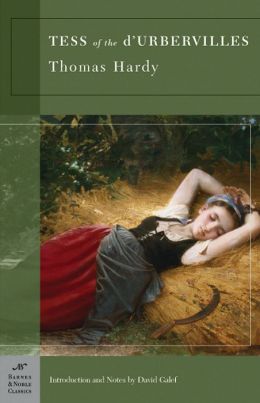
Thomas Hardy: Tess of the d'Urbervilles

  • ISBN-13: 9781593082284
  • Publisher: Barnes & Noble
  • Publication date: 6/5/2005
  • Pages: 544
Highly controversial because of its frank look at the sexual hypocrisy of Victorian society, Thomas Hardy's Tess of the d'Urbervilles was nonetheless a great commercial success when it appeared in 1891. It is now considered one of the finest novels in English.
 Using richly poetic language to frame a shattering narrative of love, seduction, betrayal, and murder, Hardy tells the story of Tess Durbeyfield, a beautiful young woman living with her impoverished family in Hardy's fictionalized Wessex, a pastoral community in southwestern England. After the family learns of their connection to the wealthy d'Urbervilles, they send Tess to claim a portion of their fortune. She meets and is seduced by the dissolute Alec d'Urberville and secretly bears a child, Sorrow, who dies in infancy. Angel Clare, a very different man, seems to offer Tess love and salvation, but he rejects her - on their wedding night - after learning of her past. Emotionally bereft, financially impoverished, and victimized by the self-righteous rigidity of English social morality, Tess escapes from her vise of passion through a horrible, desperate act. 
 With its compassionate portrait of a young rural woman, powerful criticism of social convention, and disarming consideration of the role of destiny in human life, Tess of the d'Urbervilles is one of the most moving and memorable of Hardy's novels.
 
 This book should be called Tess of the D'UrberVILES.
 Aha, see what I did there?
 Joking aside, there is nothing funny about this book. It is literally a sad fest from beginning to end. Now that you have that out of the way though, and you know that you will derive no happiness from reading this book, you can sit back and enjoy it. Because it really is beautifully written, and when you're reading it you forget a little bit about how miserable it all is.
 Really, this book is one thumper of a social commentary. The subtitle, not presented in this addition, is actually A Pure Woman Faithfully Presented. You would laugh if you knew the story beforehand and read that subtitle. Thanks to me, you can enjoy the inside joke now. Tess is a poor "farm girl," despite the fact that what I can tell, her father and mother do little to no work. She's beautiful and sweet and pure, until Alec D'Urberville comes into her path. A kindly clergyman alerts her father to his ancestry, coming from the illustrious D'Urberville line going back to William the Conqueror, and so her parents send her off to claim kin with the D'Urberville family living up the road. Except they bought into the name, don't actually come from the line. And Alec is a horny philanderer.
 All of this results in the destruction of Tess' life. It's not her fault - and that's the key. She might be blamed for being weak-willed and succumbing to her parents' wishes too easily, but other than that, her plight is the plight of many women before her and probably many after. What Hardy points out is the hypocrisy of society in blaming and punishing the woman for actions outside her control. Even when she attempts to distance herself from the circumstances of her disgrace, she is still held accountable by those who purport to be more understanding. She can't escape and her weakness leads her into more problems, until, finally, there is no way out.
 Well, that's about as best as I can describe it without giving you the entire story. Although, if you're really, super desperate to know the full tale, Wikipedia is your friend. Now let's talk about some characters.
 Alec is a giant douchenozzle to end all douchenozzles. He's manipulative in the extreme. Angel Clare, the other purported protagonist of the tale, is a sweetheart with some serious identity issues. He's parted from his clergyman father because he disagrees with his extremist religious views, but he still can't escape his roots. It's a common problem. No matter how old you get, it's hard to break old habits and ways of thought. Another lesson to take away.
 Overall: B+
 I enjoyed it, mostly because I didn't expect a lot of happiness to come out of it. There were some dry bits, but even in the amidst of wordy paragraphs celebrating odes to the beauty of the countryside, Hardy's craft is obvious. He was a great writer. So there you have it. Don't read this if you want to be happy and have faith in humanity after.

Saturday, June 8, 2013

Melissa Marr: Radiant Shadows

  • Paperback: 368 pages
  • Publisher: HarperCollins; Reprint edition (February 22, 2011)
  • Language: English
  • ISBN-13: 978-0061659249
Hunger for nourishment. Hunger for touch. Hunger to belong.
Half-human and half-faery, Ani is driven by her hungers. Those same cravings also attract powerful enemies and uncertain allies - including Devlin, the assassin who is brother to the faeries' High Queen. Ani and Devlin are drawn together, but as they grow closer, a larger threat imperils the whole of Faerie. Will saving the Faery realm mean losing each other?
 Alluring romance, heart-stopping danger, and sinister intrigue combine in the penultimate volume of Melissa Marr's New York Times bestselling Wicked Lovely series.

AH THIS TITLE MAKES SO MUCH SENSE NOW. It's really the only one, other than Ink Exchange, but yeah. Side note of excitement for sudden and blinding comprehension.
 With this installment, Melissa Marr draws one step closer to the final novel in her faery series. She keeps building on her world, which is nice, but on the other hand, I sometimes lose track of who's who. There are just so many characters running around, and shifting of allegiances, that I find myself having to go back every once in a while and refresh on what happened previously. That gets a little annoying, but I'll make the sacrifice for such a good series.
 So, in Radiant Shadows, Sorcha's losing her damn mind, the Summer Court and the Winter Court barely make appearances other than to say that hey, nothing's changed, and the Dark Court is still confusing as hell. Mostly, Irial and Niall confuse me. I have no idea why Niall angsting so hard, but he is, and Irial is still largely awesome, so there are, effectively two Dark Kings. Ish.
 The focus of this novel, one of the so-called "in between" novels, is the halfling Ani, who was introduced in the first novel, I believe. She's part Hound and is incredibly antsy to be accepted. Except that's difficult because she's...special. Enter Devlin, the High Queen's Bloody Hand, re: assassin, who was supposed to kill Ani once upon a time, but clearly didn't. Chaos ensues. Doesn't it always? This time, though, I mean literally: Bananach, War and Disorder embodied, is on the warpath and trying to stir up trouble.
 Marr is building on what she's already created, so there's not a lot of character development going on. It's kind of just getting to know already semi-familiar characters. Unless she throws in a new player, which she does (cough RAE cough DREAMWALKER WHO THE HELL ARE YOU WHAT IS GOING ON cough). Further, the plot is interesting and sufficiently twisty, although she could stand with a little less mystery and a little more exposition. For example, can we have a more clear statement regarding where Ani's wolves come from? What's up with Seth? And also are we just dropping the subject of her supposedly precious blood? (I'm sure that will be answered in the last novel, though.)
 Overall: B+
 It was not my favorite of her novels, and I'm getting a little tired of being denied knowledge gratification until the last few chapters of the novel. But it was still good and it definitely built up the suspense for the next, and last, installment.

Tuesday, May 28, 2013

Fyodor Dostoevsky: Crime and Punishment

Few authors have been as personally familiar with desperation as Fyodor Dostoevsky, and none have been so adept at describing it. Crime and Punishment - the novel that heralded the author's period of masterworks - tells the story of the poor and talented student Raskolnikov, a character of unparalleled psychological depth and complexity. Raskolnikov reasons that men like himself, by virtue of their intellectual superiority, can and must transcend societal law. To test his theory, he devises the perfect crime - the murder of a spiteful pawnbroker living in St. Petersburg. 
 Raskolnikov soon realizes the folly of his abstractions. Haunted by vivid hallucinations and the torments of his conscience, he seeks relief from his terror and moral isolation - first in Sonia, the pious streetwalker who urges him to confess, then in a tense game of cat and mouse with Porfiry, the brilliant magistrate assigned to the murder investigation. One of the most gripping crime stories of all time, Crime and Punishment delineates the theories and motivations that underlie a bankrupt morality.
 
 I knew I was doomed from reading the first paragraph, simply about Raskolnikov sneaking past his landlady because he didn't want to talk to her, and I related way too much. Like, "Holy shit, this is actually me." Happily, it didn't turn out completely that way, but close enough to be uncomfortable.
 Crime and Punishment is the story of a young college student who has a theory about great men being able/allowed to do things that ordinary men aren't. This leads to him committing a murder pretty much simply to prove his theory and prove himself one of said great men.
 What follows is the slow mental breakdown of Raskolnikov (clearly not the great man he thought he was - aha). He encounters sundry side characters who either contribute to his burden or, in their attempt to understand him, give him hope. There's his mother, Pulcheria Alexandrovna, and his sister, Dunia. His friend Razumikhin, his (girl)friend, Sonia. Of course, he has his antagonists in the forms of Porfiry and Svidrigailov. Oh, the Russian names. Complicated things, my friends, but these are the easiest to remember, I suppose. They all have interweaving storylines - they all know each other in some capacity.
 What makes this novel so compelling is how utterly human they all are. Especially Raskolnikov. You relate to him, his wanderings, his tortures, his emotions. Even if you never would have come up with his theory, you see how he came to it, and all of his actions and his emotions following the murder are so supremely human, I can't even. I related to him even more than I thought. He lashes out at those who love him most when he's angry and hurt and ashamed because he feels he doesn't deserve it, or he knows they will take the abuse and still love him after. It's something I know I do in my own life. His struggles not to collapse entirely when he realizes that Porfiry expects him. Side note about Porfiry: I started off really being irritated by him and his method of police work, but he really pulled through in the end. In his last scene in the book, I even felt a little fondness for the old fellow.
 One of the best parts of the novel, is its overall happy ending. I won't spoil it for you, but I will say that 70% of the characters witness significant improvements to their lives and overall happiness. I'll leave you to guess which ones. Also, the villains of the piece are justly dealt with. I didn't feel that they escaped what they deserved, and I think it was just so refreshing to have a Russian author not crush all my hopes and dreams that I really fell in love with it.
 Overall: A+
 While it dragged in places, as the Russian authors do, I was just so in love with the depiction of raw humanity and the ending that I'll forgive it.

Saturday, January 5, 2013

Philippa Gregory: The Other Queen

  • ISBN-13: 9781416549147
  • Publisher: Touchstone
  • Publication date: 7/14/2009
  • Pages: 464
This dazzling novel from bestselling author Philippa Gregory presents a new and unique view of one of history's most intriguing, romantic, and maddening heroines. Mary, Queen of Scots, trusts Queen Elizabeth's promise of sanctuary when she flees from rebels in Scotland and then finds herself imprisoned as the "guest" of George Talbot, Earl of Shrewsbury, and his indomitable wife, Bess of Hardwick. The newly married couple welcomes the doomed queen into their home, certain that serving as her hosts and jailers will bring them an advantage in the cutthroat world of the Elizabethan court. To their horror, they find that the task will bankrupt them, and as their home becomes the epicenter of intrigue and rebellion against Elizabeth, their loyalty to each other and to their sovereign comes into question. If Mary succeeds in seducing the earl into her own web of treachery and treason, or if the great spymaster William Cecil links them to the growing conspiracy to free Mary from her illegal imprisonment, they will all face the headsman.
 So here's a fun story for you - apparently my family is related to Mary Stuart, Queen of Scots. Yeah. I have a personal connection to this story.
 Gregory here tales the tale of one Mary Stuart, Queen of Scotland and France, and perhaps rightful heir to the throne of England. But that's kind of up in the air, considering the fact that Elizabeth Tudor sits on the throne, the Protestant Queen. I believe that Gregory portrays both queens in lights uncommon to the usual history writings about them. Elizabeth is paranoid, easily led by her advisor William Cecil, a character who you would have met before had you read another of her works, The Virgin's Lover. He was quite a fixture at that time, and you can either consider him to have been a wise advisor or a grasping plotter, take your pick. This book chooses the latter view in contrast to her earlier version of him. Much more is made of Elizabeth's reliance on him and fear of rebellion. Mary is portrayed as a cunning, conniving woman, who was not only not silly or easily led by her emotions, but was rather more unfortunate in her allies and her lack of luck. That doesn't make her continued plotting in the face of consistent failure and her unfailing insistence on the divinity of her person any less annoying.
 We also have some side characters in the Earl of Shrewsbury and his wife, Bess, one of the few successful female businesswomen of  the time. While he is played for a fool, she is as grasping as the rest of the Protestant upstarts that have snatched wealth from the churches they have thrown down, and just as reluctant to let their stolen wealth go. The more amusing parts of the novel involve her musings on how God obviously favors the Protestants since they have so much wealth, and how she knows that the Protestants are just gold-mongers at heart that really wanted the Church's wealth more than divine approbation, but she doesn't seem to care much.
 The entire story consists of plot after plot after plot to free Mary and send her to Scotland, and all the political maneuverings that abounded in Tudor England. She managed to keep it from getting too tedious, though. The only other critique I really have is the writing style. For some reason, the first person writing seemed really stilted and too self-aware. Most of the time, Gregory doesn't make it feel like the character is aware of creating a story, but this one seemed like each character was writing a journal entry for posterity. At first it was sort of uncomfortable, but you got used to it after a bit.
 Overall: B
 This wasn't among Gregory's best. The writing was a little off in comparison to her previous works, and it was just more of the same going on, although, like I said, it didn't ever stray into boring territory.

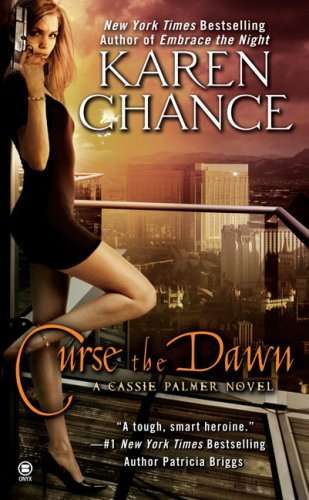
Karen Chance: Curse the Dawn

  • ISBN-13: 9780451412706
  • Publisher: Penguin Group (USA) Incorporated
  • Publication date: 4/7/2009
  • Format: Mass Market Paperback
  • Pages: 400
 Cassandra Palmer may be the all-powerful Pythia now, but that doesn't mean people have stopped trying to kill her. Most of the supernatural power players don't want independent-minded Cassie as chief clairvoyant - and they'll stop at nothing to see her six feet under. 
 The Vampire Senate does support Cassie in her position, but their protection comes with a price: an alliance with the sexy master vampire Mircea, who has claimed Cassie as his own.
 But even the vampires will have trouble keeping Cassie alive now that the self-styled god Apollo, the source of the Pythia's power, has it in for her in a big way. To save her life - and the world - Cassie's going to have to face down her creator once and for all...  
 This is going to sound absolutely horrible, but it took me to the end of the second chapter to be 100% certain that I hadn't read that book before. I'm going to attribute that to having flipped through at another point in time to find certain plot points so my mind could be at peace. Yes, I do that. I frequently read the end of novels just to make sure that I'm not going to be throwing it at a wall later.
 Cassie's in a pickle. Isn't she always? She really doesn't want to kill anyone from the Silver Circle, since those lives are the ones preventing Apollo from entering this world. On the other hand, those crazy bastards are out to get her, and 90% of them don't care if she's dead or alive, and would, in fact, prefer her dead. So there's a paradox for you. Also, Mircea is being hyper-protective, as usual, and that is growing increasingly frustrating for the new Pythia. To top off all of her other problems, she accidentally manages to swap bodies with her erstwhile companion Pritkin, causing strife and confusion for all.
 All's well that ends well, however, and I'm terribly interested to see where Chance will take Cassie in the next book. I won't tell you why, because that would spoil everything, but I'm pumped.
 I felt that, once again, Chance managed to jam pack her novel full of action. She's really not a fan of letting her heroines rest, but that's more of a symptom of the genre, I think. It certainly makes the novel fly by faster when you don't have time to get bored. I'm also on tenterhooks to see how she's going to deal with the tension between Mircea, Cassie, and Pritkin. I'm Team Mircea all the way, and I can't say I'll be terribly pleased if that relationship goes sour, but I'm willing to ride wherever Chance takes me. Especially with all of the juicy Mircea-Cassie emotional goodness going on. Mm, mm, good.
 The other downside to her fast paced plot is the whiplash-inducing wrap-up. Within two chapters we fight the big bad, solve the world's problems (for the time being), and return life to fairly-normal with some improvements. Because there's so much going on, when we finally confront the major problem, you kind of get a "oh, we're doing this now?" feeling. It's a little disorienting.
 Overall: A-
 I enjoyed it, as I always do, although the ending was a little too speedy for my taste.

Henry Fielding: Tom Jones

  • ISBN-13: 9781593080709
  • Publisher: Barnes & Noble
  • Publication date: 5/1/2004
  • Pages: 848
Reacting against the sentimentality and moralism of the earliest English novels, Henry Fielding chose to create a work whose main character contains all the complexities of a real human being: the foundling Tom Jones. Tom has been raised by the Squire Allworthy to love virtue, and he truly wants to do good. But Tom's inability to control his temper and his hearty appetite for food, drink, and the opposite sex get him kicked out of Allworthy's estate - and separated from his one real love, Sophia Western. So begins Tom's journey from the English countryside to the teeming city of London. Along the way he meets a parade of colorful characters, enjoys a series of bawdy , comic adventures, eventually discovers his true parentage, triumphs over the villainous Blifil, and rejoins the beautiful Sophia.
 Soon after its 1749 publication, Tom Jones was condemned for being "lewd," and even blamed for several earthquakes. But what really riled critics was its supremely funny satirical attack on eighteenth-century British society and its follies and hypocrisies - which, of course, are very much like our own. 
 Good lord, what a long novel. Split into eighteen books, each with numerous chapters, the first of which is a prologue to the chapter that frequently has nothing to do with the goings on of the novel itself. I don't know why, that was just kind of the style.
 Fielding was a master satirist, and took great pleasure in taking pot shots at his contemporaries. Luckily, the Barnes and Noble Classics edition is kind enough to provide footnotes explaining obscure references and personal grudges.
 Tom Jones is a foundling, i.e. a bastard child. In English society, this is not to be borne (hehe, get it?) If you're a bastard, even though that has nothing to do with your own personal character, polite society still attributes the same characteristics to you: profligacy and general vice. So, our dear Tom, despite being the most kind-hearted fellow, albeit with a naturally active sex-drive, is looked down upon and denigrated by pretty much everyone. Except for his neighbor's daughter, the angel-upon-earth, Sophia Western. She is above his station, however, and many misunderstandings and character libel ensue. Although Tom himself does nothing to purposely subvert himself, there are a slew of characters out to get him, for no other reason than that he is a bastard and is his own person, not subservient to their desires. Most of Jones' problems derive from the plots, or, in the case of some, looseness of tongue, of others.
 Unfortunately, it takes eighteen books for  everything to be set straight and for everyone to get their just desserts. Well, not everyone. Western never seems to learn his lesson and is much an ass as always by the end. For some reason, everyone forgives him, despite his frequent bi-polarity. Ridiculous. The weakness of human nature was often irritating as well. Not because Fielding was being unnecessarily dark or unrealistic, but because it was so true. People do base their views of others on appearance and hearsay, and people are easily changeable and self-serving. And while it's disgusting, you can't really complain. Because humanity sucks. And while it's annoying, it's also humorous at times, because Fielding does occasionally create completely over-blown characters for the sake of comedy.
 Overall: B+
 Fielding was frequently long-winded and pedantic, but he did it with such good humor, it didn't bother me as much as it normally would. And, aside from the frequent head-desking at the extremely circuitous route we used to arrive at our happy ending, and the repeated mistakes made by every character, the novel was quite entertaining and at least always had something going on. Except for the prologues.

Charles Dickens: A Christmas Carol


  • ISBN-13: 9781593080334
  • Publisher: Barnes & Noble
  • Publication date: 4/1/2004
  • Pages: 304
Generations of readers have been enchanted by Dickens's A Christmas Carol - perhaps the most cheerful ghost story ever. Written in just a few weeks, A Christmas Carol famously recounts the plight of Bob Cratchit, whose family finds joy even in poverty, and the moral regeneration of his miserly boss Ebenezer Scrooge as he is visited by the ghosts of Christmas past, present, and future. 
 From Scrooge's "Bah!" and "Humbug!" to Tiny Tim's "God bless us every one!" A Christmas Carol shines with warmth, decency, kindness, humility, and the values of the holidays. But beneath its sentimental surface, A Christmas Carol offers another of Dickens's sharply critical portraits of a brutal society, and an inspiring celebration of the possibility of spiritual, psychological, and social change. 
 This new volume collects Dickens's three most renowned "Christmas Books," including The Chimes, a New Year's tale and The Cricket on the Hearth, whose eponymous insect chirps amid happiness. 
 
As I really only have The Muppets Christmas Carol as a reference, I have to say - they did a pretty good job of keeping everything accurate. There was never a moment when I said to myself, "Well, that wasn't in the movie."
 But since this is not a movie review, that's all I'll say as far as that goes. I really just wanted to point out that I already knew Scrooge's story fairly well. And it's still one of my favorite Christmas stories. I love the spirit of Christmas present, and I kind of wish he would show up to me some Christmas Eve and take me around and generally have a rockin' good time. Although I would be terribly sad when he eventually grew old as dawn approached. Since everyone pretty much knows A Christmas Carol, I'm pretty much going to leave that one alone. Go read it!
 The second short story in this collection was entitled, "The Chimes." I'm not going to lie to you - I'm not 100% certain what this story was about, for one simple reason - it was a little confusing and also I was extremely tired when I was reading part of it, and was probably fading in and out of consciousness a bit, I blush to say. Essentially, there's a little package-carrier named Trotty that meets the spirits of some bells and they teach him a lesson. That's the major theme in all these stories - spirits teaching lessons. He spends a lot of time thinking about how people are generally bad and especially other poor people, for some reason. The spirits show him that sometimes circumstances lead otherwise good people into desperate situations, and show him a horrible future, pretty just because he was thinking negative thoughts. Of course, he returns home and is grateful for his meager life for the rest of his days.
 Parte trois de this collection is "The Cricket on the Hearth," which is an absolutely lovely story of pure love between two good people and the extent to which love can carry one. That's a lot of love, guys. There's a bitter old man who changes his ways, a sweet little blind girl whose father hides the reality of their bleak life from her unseeing eyes, and a former lover of a young girl who almost destroys a marriage (unintentionally). Sound confusing and like they might not all belong in the same story? I promise it makes total sense and it's a beautiful story. Kind of made me want to have a cricket in my fire place, although I absolutely loathe bugs.
 Overall: A
 Charles Dickens is always a pleasure, but I was particularly pleased with these short stories. They all involved families gathered around a certain communal living space learning to appreciate what they had. And for Christmas, what other lesson is there, really?

Rachel Vincent: My Soul to Keep

  • ISBN-13: 9780373210053
  • Publisher: Harlequin
  • Publication date: 6/1/2010
  • Pages: 304
 Kaylee has an addiction: her very hot, very popular boyfriend, Nash. A banshee like Kaylee, Nash understands her like no one else. Nothing can come between them.
 Until something does.
 Demon breath. No, not the toothpaste-challenged kind. The Netherworld kind. The kind that really can kill you. Somehow the super-addictive substance has made its way to the human world. But how? Kaylee and Nash have to cut off the source and protect their friends - one of whom is already hooked.
 And so is someone else...

 NAAAAAASH - she screamed in fury.
 Oh, Rachel, you crazy, sadistic wench. Why must you do this to my emotions on a fairly regular basis? My little fangirl heart can't handle the strain. Although the promise of things to come does somewhat alleviate the pain....
 As I'm sure you've already figured out, Nash and our heroine Kaylee are on the rocks, but why? That is the important question. And not even the most important question. Vincent does a wonderful job in this novel of effectively reproducing the virtually unbounded stupidity of teenagers. Especially rich bitch teenagers. So effective, in fact, that I spend the majority of the novel head-desking hard enough to knock books askew.
 Kaylee and her cousin Sophie are still at odds, mostly because Sophie's a raging bitch-head but also because she sort of blames Kaylee for her mother's death. Emma is dating some moronic jock (so is Sophie, but can we really expect any less? Or more?) who is hell bent on snuffing some new drug, street name "Frost." Real name, Demon's Breath, the highly addictive carbon dioxide exhalation of a hellion from the Netherworld. Sounds fun, right? Getting all jumped up on someone else's bad breath, yum.
 But actually, no, it's highly destructive to the human body and mind, and withdrawal is the mother of all psyche-breakers. Doug and his friends apparently didn't get the memo, and now Kaylee and Nash are out to save all their sorry, thrill-seeking butts. Kaylee, for once, is playing the safe card, wanting to take the whole situation to the adults to handle, but Nash is, for some reason, holding her back, supposedly to protect his dumbass friends. I smell something rotten in the state of Denmark, methinks.
 Also, for some strange reason, Kaylee is unable to sleep because she soul-screams herself right into the Netherworld. Yes, you heard that right. While having nightmares of a death, she screams herself straight out of the real world and into the next, a talent that only the female bean sidhe possesses. Which means she's also going to have to get herself out. After one experience of this, she needs constant watching while she sleeps, to have someone there are to wake her should she start screaming. Fascinating, awkward, and hard to deal with, while also reflecting my actual life at the time of reading. It's the perfect storm of awesomeness.
There isn't too much character development in this installment, unless you count that punch Tod threw at Nash's head, in which case I think we have a deep insight into his character. Save that for later. Ruminate on it, savor it. Think back on it later. Other than that...everyone is pretty static. Other than Nash, of course, and I'm not even going to touch that one with a ten-foot pole for fear of spoilers. Honestly, though, that's about as close as I can even get to the matter without giving the whole thing away, willy nilly.
 Overall: B+
 I was genuinely annoyed with the moronic actions of nearly everyone in the novel, but since they're teenagers, this is, then, a highly accurate depiction. Vincent catches some slack from that. Other than that, I feel like My Soul to Sleep only created more questions rather than solving any of them. We didn't get to see much bean sidhe action, and that was disappointing. Nonetheless, it was still a fun ride.